
What Should You Draw to Become a Tattoo Artist?
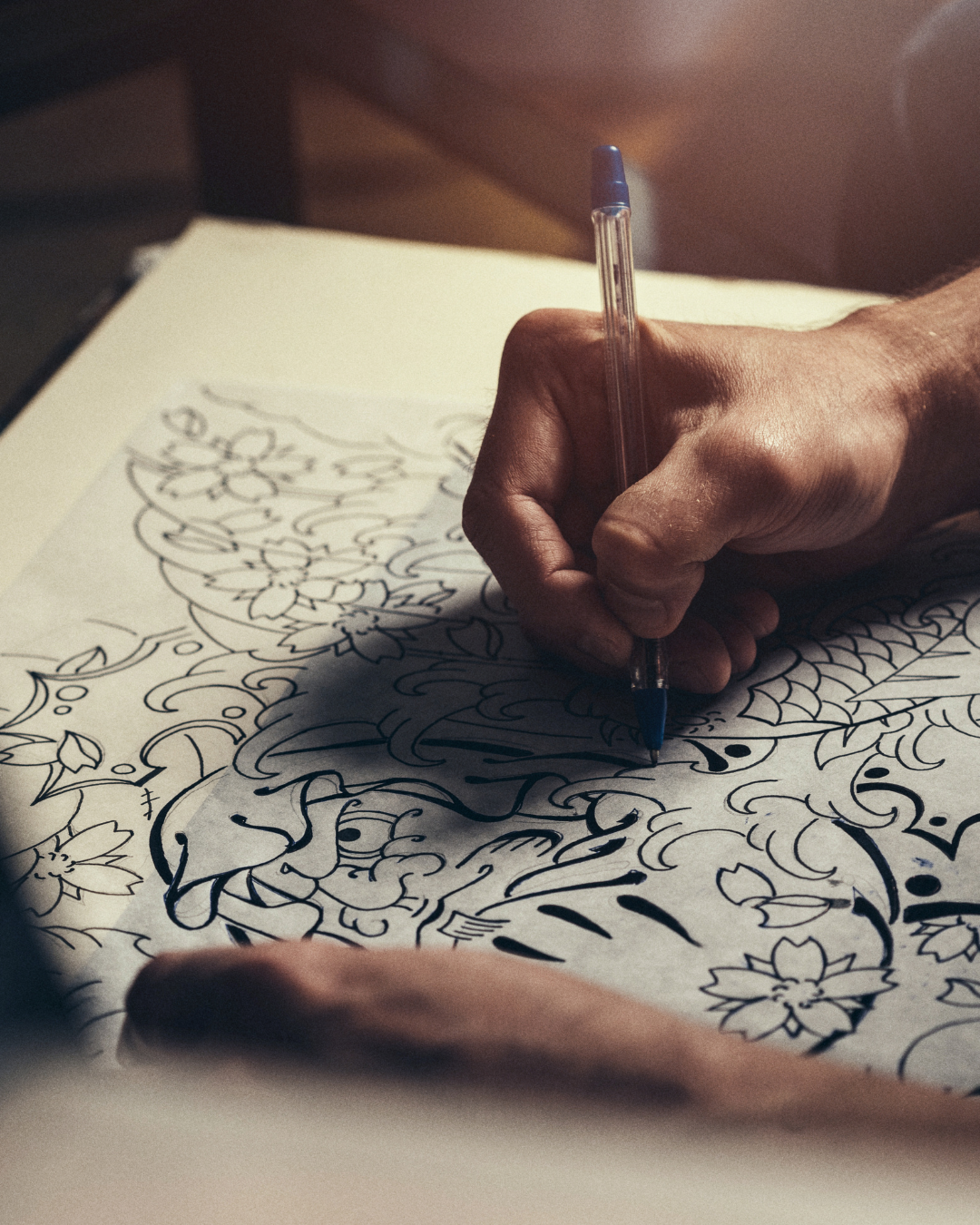
If you want to become a tattoo artist, “draw every day” is technically good advice.
It is also annoyingly vague.
Draw what? For how long? In what style? Should you be drawing skulls, roses, anime characters, lettering, realism, flash, hands, snakes, or whatever object is sitting next to your coffee?
The answer is: yes, kind of.
A strong tattoo sketchbook should show range, control, patience, and an understanding of what works on skin. Tattooing is not the same as making a pretty drawing for your wall. A tattoo design has to be readable, balanced, technically possible, and built to age well.
Here are the drawing subjects and exercises aspiring tattoo artists should focus on before they ever pick up a tattoo machine.
Basic Shapes and Clean Lines
Before you worry about style, start with control.
Tattooing requires steady hands, consistent pressure, and the ability to pull clean lines with intention. If your sketchbook is full of cool ideas but the lines are scratchy, rushed, or uncertain, that will show.
Practice:
Straight lines
Curved lines
Circles
Ovals
Boxes
Triangles
Long continuous lines
Parallel lines
Repeating shapes
Simple geometric designs
This may feel boring, but boring practice builds real skill. Clean linework is one of the easiest ways to spot the difference between someone who draws casually and someone who is training seriously.
Try this:
Fill one page with straight lines.
Fill one page with circles.
Fill one page with S-curves.
Fill one page with repeated shapes.
Do not erase. Do not overcorrect every line. Learn to see what your hand naturally does and where your control needs work.
Lettering
Lettering is one of the most practical skills an aspiring tattoo artist can build.
Even artists who specialize in illustrative, fine-line, realism, or color work will still get asked about names, dates, phrases, memorial tattoos, and meaningful words. If you can draw clean, balanced lettering by hand, you immediately become more useful in a tattoo setting.
Practice:
Simple print lettering
Script lettering
Serif letters
Old English-inspired lettering
Block letters
Small word tattoos
Arched lettering
Names and dates
Short phrases
Lettering with banners
Pay attention to spacing. Most beginner lettering looks off because the letters are uneven, too close together, or not following the same baseline.
Do not rely only on fonts. Fonts can be helpful references, but tattoo artists need to understand how letters are built, how they flow, and how they need to be adjusted for the body.
Roses and Flowers
Flowers are tattoo staples for a reason. They work in almost every style, can be simple or detailed, and teach you a lot about shape, flow, layering, and contrast.

Start with roses, then branch out.
Practice drawing:
Roses
Peonies
Lotus flowers
Daisies
Chrysanthemums
Lilies
Cherry blossoms
Wildflowers
Leaves
Stems
Vines
Botanical arrangements
Flowers are especially useful because they teach you how to build a design from the inside out. You have to think about structure, overlap, and direction.
A flower tattoo also needs to be readable. If every petal has the same line weight and the same amount of detail, the whole thing can turn into visual mush. That is the scientific term. Probably.
Skulls
Skulls are another classic tattoo subject because they teach structure, symmetry, proportion, and shading.
You do not have to love dark imagery to benefit from drawing skulls. They help train your eye to understand form.
Practice:
Front-facing skulls
Side-view skulls
Three-quarter view skulls
Simple traditional skulls
Realistic skull studies
Skulls with flowers
Skulls with snakes
Skulls with daggers
Animal skulls
Skulls also show whether you understand light and shadow. If the eye sockets, cheekbones, jaw, and teeth are not placed correctly, the whole drawing feels off.
Start simple. Learn the structure first. Add style later.
Animals
Animal tattoos are popular, but they are also easy to mess up.
A slightly wrong eye placement or awkward nose shape can make a pet portrait look unlike the actual pet. A wolf can become a husky. A tiger can become a weird house cat with confidence issues.
Practice:
Cats
Dogs
Birds
Snakes
Wolves
Moths
Butterflies
Bees
Fish
Frogs
Horses
Pet portraits from reference photos
For aspiring tattoo artists, animals teach anatomy, texture, expression, and gesture. They also teach humility, which is rude but useful.
When practicing animals, do not only draw the outline. Study the structure underneath. Where are the eyes placed? How long is the muzzle? What direction does the fur move? What makes that animal recognizable?
Hands, Faces, and Anatomy
Hands and faces are intimidating because humans are very good at noticing when they look wrong.
That is exactly why you should practice them.
Tattoo artists often need to draw figures, portraits, symbolic hands, eyes, faces, and body parts. Even if you do not plan to specialize in realism, understanding anatomy will make your designs stronger.
Practice:
Hands in different positions
Eyes
Noses
Mouths
Ears
Faces from different angles
Arms and legs
Torso studies
Skeleton studies
Muscle structure
Simple figure drawing
You do not need to become a medical illustrator. But you do need enough anatomy knowledge to avoid stiff, awkward, or distorted designs.
A good goal is not perfection. A good goal is believability.
Traditional Tattoo Flash
Traditional flash is one of the best training tools for aspiring tattoo artists.
Flash designs teach bold shapes, strong silhouettes, readable compositions, clean linework, limited color palettes, and long-lasting design logic. Even if your dream style is completely different, studying traditional tattoo flash can make your work stronger.
Practice drawing:
Roses
Daggers
Snakes
Swallows
Panthers
Hearts
Banners
Ships
Eagles
Lady heads
Pinups
Tigers
Sacred hearts
Classic flash sheets
The goal is not to copy forever. The goal is to understand why the designs work.
Ask yourself:
Can I read this design from across the room?
Where is the strongest contrast?
What is the main shape?
How does the eye move through the design?
Would this still look good as a tattoo in 10 years?
That kind of thinking separates tattoo design from random illustration.
Simple Tattoo-Ready Designs
A common beginner mistake is trying to make every drawing overly detailed.
Tiny details can look impressive on paper, but they may not translate well to skin, especially at smaller sizes. Tattoo designs need breathing room.
Practice creating simple tattoo-ready designs:
Small flowers
Simple animals
Clean symbols
Minimal linework designs
Small ornamental pieces
Palm-sized flash
Matching tattoo ideas
Simple memorial designs
Fine-line concepts
Blackwork designs
Then ask:
Would this work at 2 inches?
Would this work at 5 inches?
Where would it go on the body?
Would the details hold up?
Is the design readable without explanation?
Tattoo design is a balance between creativity and restraint. Beginners often want to add more. Tattoo artists learn when to stop.
Shading and Value Studies
Shading creates depth, contrast, and readability.
Practice shading with:
Graphite pencils
Ink wash
Markers
Ballpoint pen
Digital brushes
Stippling
Hatching
Cross-hatching
Smooth gradients
Black and gray studies
Start with simple forms:
Spheres
Cubes
Cones
Cylinders
Ribbons
Fabric folds
Flowers
Skulls
If you understand how light hits basic forms, you can apply that knowledge to almost anything.
For tattooing, contrast matters. A design with light, medium, and dark values will usually read better than one where everything is the same gray tone.
Designs That Fit the Body
A tattoo design does not live on a flat piece of paper forever. It has to fit a body.
That means you need to practice designing with placement in mind.
Try drawing designs for:
Forearms
Upper arms
Shoulders
Thighs
Calves
Sternums
Ribs
Hands
Necks
Ankles
Back pieces
Think about shape and flow.
A design for a forearm may need to be longer and narrower. A shoulder design may need to curve. A sternum tattoo needs symmetry and balance. A thigh piece can usually hold more detail than a wrist tattoo.
Tattoo artists do not just make images. They design for skin, movement, anatomy, and placement.
Flash Sheets
Once you have practiced individual subjects, start creating full flash sheets.
A flash sheet is a collection of tattoo-ready designs organized on one page. This is one of the best ways to build a portfolio because it shows style, consistency, and design thinking.
Create flash sheets based on themes like:
Botanical tattoos
Spooky tattoos
Traditional flash
Fine-line symbols
Animal tattoos
Celestial tattoos
Mythology
Insects
Food tattoos
Pet memorials
Valentine flash
Halloween flash
A good flash sheet should feel cohesive. The designs do not need to match exactly, but they should look like they belong together.
Think about spacing, balance, and presentation. Shops are not only looking at whether you can draw. They are looking at whether you can organize ideas into tattooable designs.
Your Own Ideas
References are important. Studies are important. Copying classic designs for practice can teach you structure.
But your sketchbook should not only be copies.
Aspiring tattoo artists need to start developing original ideas too. That does not mean every design has to be wildly unique. It means you should practice combining references, changing compositions, and making choices.
Try prompts like:
Draw a rose without looking at a reference.
Design a snake tattoo for a forearm.
Create a moth tattoo with ornamental details.
Draw a skull with a flower growing through it.
Make a flash sheet based on your favorite season.
Design three versions of the same idea in different styles.
Turn a simple object into a tattoo design.
Originality comes from practice, not waiting around for inspiration to kick the door down.
What Should Be in a Tattoo Apprentice Portfolio?
If you are building a portfolio for a tattoo apprenticeship, include variety. A strong portfolio should show that you can draw, design, and think like a future tattoo artist.
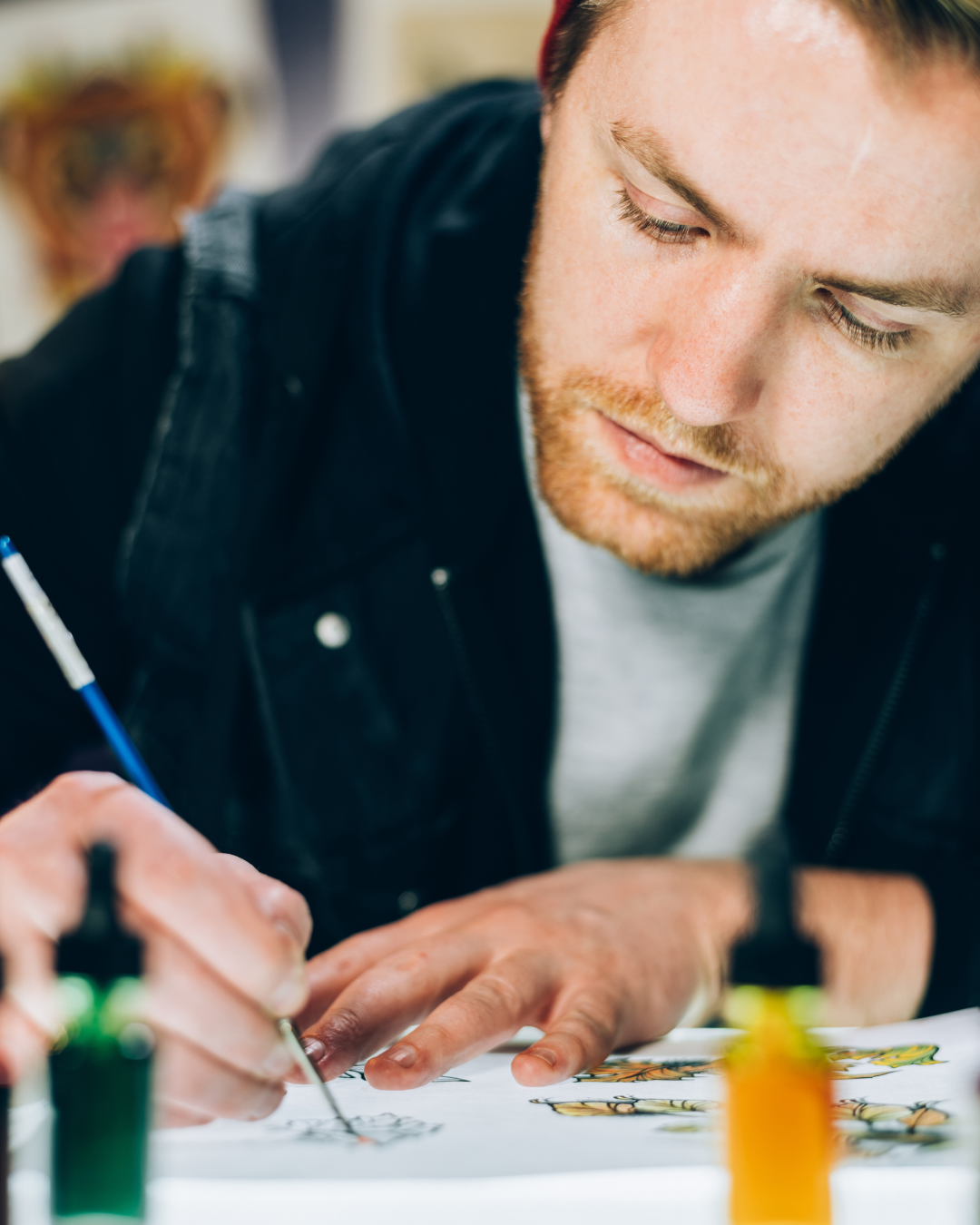
Include:
Clean linework
Lettering
Flash sheets
Flowers
Skulls
Animals
Human anatomy studies
Black and gray shading
Color work, if relevant
Tattoo-ready designs
Original concepts
Different styles
Finished pieces, not only sketches
Avoid filling your portfolio with only one subject or one style. If every page is the same kind of drawing, it may not show enough range.
Also, presentation matters. Use clean scans or photos. Keep pages organized. Remove unfinished work unless it shows an important process. A messy portfolio can make good work look less impressive.
A Simple Weekly Drawing Plan for Aspiring Tattoo Artists
If you are not sure where to start, try this:
Monday:
Linework and basic shapes
Tuesday:
Lettering practice
Wednesday:
Flowers or botanical studies
Thursday:
Skulls, animals, or anatomy
Friday:
Tattoo flash study
Saturday:
Create one original tattoo-ready design
Sunday:
Review your work and choose what to improve next week
This does not have to take hours every day. Consistency matters more than dramatic bursts of motivation.
Even 30 focused minutes a day can build noticeable progress over time.
Final Thought: Draw Like You’re Training, Not Just Posting
Social media makes it easy to focus on finished pieces, likes, and whether your sketchbook looks impressive.
But training to become a tattoo artist is not only about making pretty drawings. It is about building control, patience, design judgment, and the ability to make artwork that works on skin.
Draw the boring stuff.
Draw the classic stuff.
Draw the hard stuff.
Draw the things clients will actually ask for.
Draw the things that make you uncomfortable.
That is how your sketchbook becomes more than a collection of art. It becomes evidence that you are training seriously.
Want More Tattoo Education?
We’re developing an online tattoo apprenticeship program for aspiring tattoo artists who want structured guidance, real assignments, and a stronger foundation before entering the tattoo industry.
Subscribe to our email list for tattoo drawing tips, apprentice resources, and early access to the program.